Electrician Services That Improve Home Safety and Convenience
A good electrician is part safety specialist, part detective, part marriage counselor for appliances that refuse to share a circuit peacefully. When the lights flicker every time the microwave starts, that is not your house being dramatic. It is the electrical system asking for a little attention before it starts expressing itself through tripped breakers, warm outlets, or the distinctive aroma of toasted dust and poor decisions.
Home electrical work sits in that strange category where people notice it constantly but think about it rarely. Flip a switch, charge a phone, run the dishwasher, dry your hair, stream a film, keep the refrigerator humming, and maybe ask the garage outlet to power a freezer, battery charger, and holiday inflatable snowman all at once. Most homes carry more electrical load now than they did when they were built, even homes from the early 2000s. Add electric vehicle chargers, heat pump installation, smart lighting, home offices, security cameras, and the kitchen gadget population explosion, and suddenly the humble service panel has a full social calendar.
The right electrician services do more than fix a dead outlet. They make a home safer, easier to live in, more resilient, and less likely to ruin your Saturday with a breaker that trips every time someone uses the toaster.
The quiet safety work behind ordinary comfort
The safest electrical systems are usually boring. No sparks. No buzzing. No mystery switches that appear to control nothing except family arguments. Boring is the goal.
Behind that boring experience are several layers of protection. Breakers guard against overloads and short circuits. Grounding gives fault current a safer path. GFCI devices help protect people from shock in damp areas. AFCI devices help detect certain arcing faults that can start fires inside walls or cords. Properly sized wiring prevents overheating. Good connections keep resistance low, which is electrician-speak for “let’s not turn this junction box into a tiny oven.”
I once visited a home where the owner complained that one bedroom smelled “hot” after the space heater had been running. That is a sentence that makes every electrician set down the coffee. The outlet looked fine from across the room, but the receptacle was warm, the plug fit loosely, and the backstabbed connection behind it had been cooking slowly for who knows how long. The fix was not glamorous. New receptacle, proper side-terminal connections, inspection of the circuit, and a stern conversation about portable heaters. But that simple repair likely prevented a serious problem.
Electrical safety often improves through small, unglamorous corrections. Replacing loose outlets. Repairing damaged cable. Updating old two-prong receptacles properly instead of slapping on three-prong outlets with no grounding path. Adding GFCI protection near sinks, laundry areas, garages, basements, and exterior locations. Cleaning up overloaded power strips. Labeling a panel so “kitchen maybe?” stops being an electrical strategy.
Convenience is the part homeowners ask for. Safety is the part a good Electrician refuses to ignore.
When your electrical panel becomes the family bottleneck
The service panel is the traffic controller of the home. If it is undersized, outdated, damaged, poorly labeled, or stuffed with questionable additions, the whole house suffers.
Older homes may have 60-amp or 100-amp service. Many modern homes have 150-amp or 200-amp service, though the right size depends on the house, appliances, heating and cooling equipment, and future plans. A home with gas heat, gas water heating, and modest electrical demand may function well on less capacity than a house with electric cooking, electric water heating, a heat pump, a workshop, and an EV charger. Load calculation matters. Guessing is how panels end up looking like a spaghetti dinner with voltage.
Panel upgrades often come up during renovations. A homeowner wants a finished basement with a bathroom, kitchenette, mini-split, recessed lighting, and a media area. Suddenly the panel has no available breaker spaces, and the old circuits were already serving half the house plus the garage freezer. In that case, adding a subpanel or upgrading the main service can turn a cramped, fragile setup into something that can grow with the home.
There are also panels that deserve retirement for safety reasons. Certain obsolete or problematic panel brands are known in the trade for failing to trip reliably or having poor component availability. Not every old panel is dangerous simply because it is old, but age plus corrosion, overheating marks, water intrusion, loose breakers, or amateur modifications should raise eyebrows high enough to need their own permit.
A proper panel upgrade usually involves coordination with the utility, permits, grounding and bonding checks, service entrance evaluation, and sometimes meter base replacement. It is not just “swap the gray box.” Done well, it improves safety and makes future work cleaner. Done badly, it becomes a metal cabinet full of regret.
Outlets where life actually happens
Convenience often starts with receptacle placement. Builders from decades past seemed convinced that families owned one lamp, one television, and no chargers. Modern life disagrees.
Adding outlets can eliminate extension cord jungles, especially in home offices, bedrooms, garages, kitchens, and entertainment areas. A home office may need dedicated circuits for computers, printers, monitors, and networking equipment. A garage might need outlets for power tools, a freezer, battery chargers, or a future EV charger. Kitchen counters require properly The original source spaced, GFCI-protected receptacles because small appliances multiply when nobody is looking. One day you own a coffee maker. The next day the air fryer has negotiated counter space like a diplomat.
Dedicated circuits are especially useful for high-demand devices. Microwaves, refrigerators, dishwashers, disposals, sump pumps, laundry equipment, and bathroom receptacles often need their own circuits or carefully planned shared circuits depending on code requirements and local rules. A sump pump sharing a circuit with a garage freezer and holiday lights is not convenience. It is suspense.
Outdoor outlets also deserve attention. Weather-resistant receptacles with proper covers and GFCI protection make yard work, patio lighting, and seasonal decorations safer. The “extension cord through the window” method has a certain rustic charm, but so does churning butter. We have improved.
Lighting that does more than prevent shin injuries
Lighting contractor work can transform how a home feels and functions. The best lighting plans layer general lighting, task lighting, and accent lighting without making the living room resemble a dentist’s office.
Recessed lighting helps in kitchens, basements, hallways, and living areas, but layout matters. Too few fixtures create shadows. Too many create glare and a ceiling that looks like an airport runway. Fixture temperature matters too. Warm white light, often around 2700K to 3000K, feels comfortable in living spaces. Cooler light can help in garages, laundry rooms, and task-heavy areas, though nobody wants their dining room lit like a medical exam room unless the soup is under investigation.
Under-cabinet lighting is one of those upgrades homeowners rarely regret. It improves food prep, reduces shadows, and makes the kitchen look more finished. Stair lighting, closet lighting, and motion-controlled pantry lights add convenience in small ways that feel luxurious. The first time a pantry light turns on automatically while your hands are full, you may briefly believe civilization has peaked.
Smart switches and dimmers can also improve convenience, but compatibility matters. LED fixtures and dimmers do not always play nicely together. A cheap dimmer paired with the wrong LED bulbs can flicker, buzz, or refuse to dim smoothly. For multi-location switching, smart controls may need neutral wires in switch boxes, which older homes do not always have. An electrician can evaluate the wiring before you buy six smart switches and discover they are now expensive drawer decorations.
GFCI, AFCI, and the alphabet soup that protects people
GFCI stands for ground-fault circuit interrupter. It helps protect against electrical shock by detecting tiny imbalances in current, often caused when electricity is leaking through an unintended path. Bathrooms, kitchens, garages, outdoors, basements, laundry areas, and other damp or potentially wet locations commonly require GFCI protection.
AFCI stands for arc-fault circuit interrupter. It helps detect certain arcing conditions that standard breakers might not catch. Arcing can happen from damaged cords, loose connections, crushed cable, or deteriorated wiring. Requirements vary by jurisdiction and code cycle, but AFCI protection has become common in many living areas.
These devices are not magic force fields. They do not excuse bad wiring, damaged cords, overloaded circuits, or using a hair dryer in a bathtub because “the outlet has buttons.” But they add meaningful protection.
A frequent service call involves a “dead outlet” in a bathroom, garage, or kitchen. Often the culprit is a tripped GFCI upstream. The homeowner checks the breaker panel, sees nothing tripped, and assumes the outlet has entered witness protection. Sometimes the reset button is in another bathroom, the garage, or behind a stack of cleaning supplies. A good electrician not only restores power but explains the layout so the next reset does not require a treasure map.
Electrical inspections before renovations, purchases, and surprises
A pre-renovation electrical inspection saves money by finding constraints before drywall dust begins its reign. It can reveal insufficient panel capacity, knob-and-tube wiring, ungrounded circuits, aluminum branch wiring, overloaded circuits, improper junctions, or previous DIY work that appears to have been inspired by abstract sculpture.
Homebuyers also benefit from a deeper electrical evaluation, especially in older homes. General home inspectors can identify visible concerns, but a licensed electrician can open panels where allowed, trace issues, test receptacles, and provide repair priorities. Not every defect requires panic. Some issues are urgent, some are negotiable, and some are “fix when you remodel.” Professional judgment matters.
Here is a compact way to think about electrical warning signs that deserve prompt attention:
| Sign | Why it matters | | --- | --- | | Warm outlets or switches | Heat can indicate loose connections or overload | | Frequent breaker trips | The circuit may be overloaded or faulting | | Buzzing panels or devices | Loose parts, failing breakers, or arcing may be present | | Burning smells | Stop using the circuit and call for service | | Flickering across multiple rooms | Could involve service, neutral, or panel issues |
A single flickering lamp may be a bad bulb. Multiple lights dimming sharply when appliances start could point to voltage drop, overloaded circuits, utility issues, or a loose neutral. A loose neutral is not a “keep an eye on it” situation. It can damage appliances and create hazardous voltages. That one earns a quick phone call.
Surge protection for the appliance era
Whole-home surge protection used to sound like an upsell until houses filled with circuit boards. Furnaces, refrigerators, washing machines, ranges, garage door openers, smart thermostats, air handlers, heat pumps, and modern water heaters may all contain electronics. A surge does not have to be a dramatic lightning strike that turns the sky purple. Smaller surges from utility switching, equipment cycling, or nearby events can stress electronics over time.
A whole-home surge protective device at the panel provides a first line of defense. Point-of-use surge strips still help for sensitive electronics, especially computers and entertainment equipment, but not all power strips are surge protectors. Some are just outlet multipliers with confidence.
Surge protection is particularly worth discussing when installing expensive HVAC equipment. An Air conditioning contractor or Heating contractor may focus on refrigerant, airflow, ductwork, and equipment sizing, while the electrician ensures safe power, disconnects, breakers, and surge protection. Heat pump installation especially benefits from clean coordination. These systems are efficient and capable, but they do not enjoy electrical abuse any more than the rest of us.
Backup power without the backyard circus
Power outages reveal how dependent a home is on electricity. The refrigerator warms. The sump pump stops. The Wi-Fi dies, causing teenagers to rediscover candlelight and despair. Backup power can range from a portable generator with a manual transfer switch to a permanently installed standby generator.
The key phrase is transfer switch. Backfeeding a home through a dryer outlet or other improvised connection is dangerous and can energize utility lines, putting line workers at risk. It can also damage equipment and create fire hazards. A proper interlock or transfer switch isolates the home from the utility while the generator runs.
Sizing depends on priorities. Some households only need essentials: refrigerator, freezer, sump pump, furnace blower, a few lights, and outlets. Others want air conditioning, well pump, kitchen circuits, and nearly normal operation. Running central air on backup power requires careful planning because startup loads can be high. Soft starters may help in some cases, but they are not a universal answer.
Standby generators that use natural gas or propane require coordination with a Gas installation service and often an electrician. The gas line must be properly sized, the electrical transfer equipment correctly installed, and local permits handled. When done correctly, backup power is wonderfully uneventful. The power drops, the generator starts, selected circuits return, and everyone pretends they were never worried about the freezer full of meat.
HVAC, plumbing, and electrical work are more connected than homeowners expect
Home systems do not live in separate kingdoms. Electrical work often overlaps with HVAC, plumbing, gas, and septic equipment.
An Air conditioning repair service may diagnose a failed condenser fan motor, but electrical supply issues can mimic equipment failure. Low voltage, bad disconnects, damaged whip wiring, weak capacitors, or tripping breakers can all affect cooling. During Air conditioning repair, a technician may call in an electrician when the issue is upstream of the unit. During Air conditioning maintenance or an Air conditioning tune-up, electrical connections, contactors, capacitors, and disconnects are often checked because loose connections and heat are old enemies.
Heating equipment has similar crossover. A Furnace repair service may need electrical troubleshooting for control boards, blower motors, ignition systems, or thermostat wiring. A Heating contractor installing new equipment may need a dedicated circuit, service switch, condensate pump outlet, or updated wiring. Heat pumps, mini-splits, and high-efficiency systems make electrical planning more important, not less.
Plumbing equipment leans on electricity too. A Plumber handling Water heater installation may need an electrician if the new unit is electric, hybrid, or requires a different circuit. Water heater repair can involve thermostats and elements on electric models, but circuit sizing and disconnects still matter. Water softener installation may require a nearby receptacle. Sump pumps and sewage ejector pumps need reliable power and GFCI considerations that balance safety with nuisance tripping risks, depending on local code and equipment type.
Even drain work has electrical touchpoints. Drain cleaning, Rooter service, and Hydrojetting rely on powered equipment. If basement outlets are unsafe, ungrounded, or poorly placed, service work becomes harder and riskier. Septic system service may involve pumps, alarms, floats, control panels, and outdoor wiring that must be weatherproof and properly protected. When systems fail, people often blame the most visible trade. The real culprit may be a corroded connection inside a control box quietly auditioning for a crime drama.
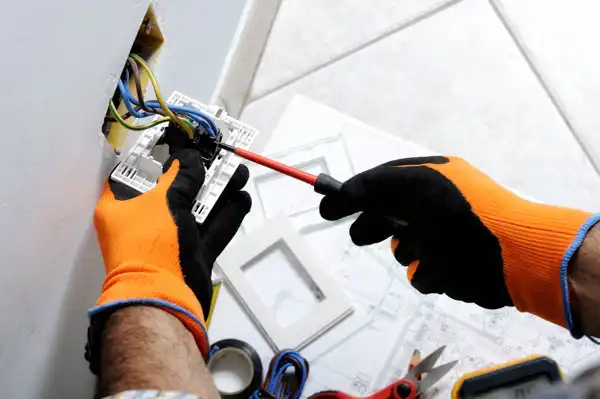
The underrated convenience of dedicated circuits
A dedicated circuit is not glamorous, but neither is a dishwasher stopping mid-cycle because the countertop oven joined the party. Dedicated circuits give high-demand appliances their own lane.
Kitchens are the classic battleground. Coffee makers, air fryers, microwaves, toaster ovens, blenders, mixers, and electric kettles can pull serious current. Two small-appliance circuits may meet many kitchen needs, but real-world use sometimes calls for more thoughtful planning, especially during remodels. If a household uses multiple countertop appliances every morning, adding circuits can prevent nuisance trips.
Bathrooms benefit too. Hair dryers, curling irons, towel warmers, bidet seats, heated floors, and ventilation fans can make a bathroom surprisingly power-hungry. A dedicated bathroom receptacle circuit, installed according to code, can keep mornings from turning into a breaker-panel parade.
Laundry areas deserve respect. Washers, gas dryers with electrical controls, electric dryers, utility sinks, irons, and sometimes dehumidifiers may share tight spaces. Add a freezer nearby, and things get interesting. A clean electrical plan keeps laundry day dull, which is exactly how laundry day should be.
Garages are another trouble spot. Tools, compressors, welders, EV chargers, refrigerators, and chargers for lawn equipment create overlapping loads. A dedicated 20-amp circuit for general use, additional circuits for tools, and a properly sized EV charging circuit can turn a garage from extension-cord archaeology into a functional workspace.
Smart home upgrades that do not make the house too clever for its own good
Smart home devices can improve convenience, security, and energy control. Smart thermostats, lighting controls, doorbells, cameras, occupancy sensors, leak detectors, and connected outlets all have their place. The trick is choosing devices that solve real annoyances rather than creating a second unpaid job as household IT manager.
Smart lighting works well in exterior lights, hallways, living rooms, and bedrooms where scheduling or voice control adds value. Smart switches usually beat smart bulbs for fixtures controlled by wall switches, because guests can still use the switch without accidentally disabling the system. Motion sensors are excellent for closets, pantries, garages, and laundry rooms. They are less excellent in bathrooms if poorly placed, unless you enjoy waving at the ceiling while contemplating life.
Smart thermostats require proper wiring. Many need a common wire, often called a C-wire, for steady power. Some homes have it available but tucked behind the wall. Others need an adapter or new thermostat cable. Guesswork can damage control boards, particularly on HVAC equipment, and nobody wants a thermostat upgrade to become a Furnace repair service visit.
Smart doorbells and cameras may need transformer upgrades. Older doorbell transformers often lack enough power for modern video units. Symptoms include buzzing chimes, dead batteries, overheating transformers, or a doorbell that works only when Mercury is in retrograde. An electrician can install the correct transformer and tidy the wiring.
The old wiring question
Older wiring can be perfectly serviceable or a serious concern depending on type, condition, modifications, and load. Knob-and-tube wiring, cloth-insulated cable, ungrounded circuits, and aluminum branch wiring all require careful evaluation.
Knob-and-tube wiring was designed for a very different era. It can become hazardous when insulation deteriorates, when it is buried in insulation, when circuits are extended improperly, or when loads exceed what the system was meant to handle. Insurance companies may also object. Replacement can be invasive, but targeted rewiring during renovations often reduces cost and disruption.
Ungrounded two-prong outlets are common in older homes. Installing three-prong receptacles without a ground creates a false sense of safety and can violate code. There are acceptable ways to improve usability, such as installing GFCI protection and labeling outlets properly where allowed, or rewiring circuits with grounding conductors. The right answer depends on the home and local requirements.
Aluminum branch wiring from certain eras can be managed with approved repair methods, but it is not a casual DIY project. Aluminum expands and contracts differently than copper, and improper connections can overheat. Repairs may involve special connectors and techniques. Twisting copper and aluminum together under a standard wire nut is not “good enough.” It is the electrical equivalent of storing fireworks in a toaster.
Remodels: where convenience is cheapest before the walls close
Electrical upgrades cost less when walls and ceilings are open. During a kitchen remodel, bath renovation, basement finishing, or addition, it pays to think beyond minimum code.
Where will people charge phones? Where will the vacuum plug in? Does the island need power? Will the range be gas now but electric later? Is the water heater staying gas, or might future Water heater installation involve electric or hybrid equipment? Will the home eventually add solar, battery storage, an EV charger, or a heat pump? Should the attic or crawlspace get lighting and a service receptacle? These questions are not overthinking. They are how you avoid opening finished walls later, which is one of the least festive homeowner experiences.
Coordination with other trades matters. If a Plumber is relocating fixtures, electrical clearances around tubs, showers, sinks, pumps, and water lines must be maintained. Plumbing leak repair may expose damaged wiring if water has entered walls or ceilings. Plumbing repiping can open paths for new circuits, but it can also disturb old cable. Drain cleaning access, sump pump placement, and sewage pump alarms all need planning. A good remodel feels smooth when the trades communicate. A bad one feels like three raccoons fighting inside a permit folder.
A short homeowner checkup before calling
You should not remove panel covers or poke around inside electrical boxes unless you are qualified. Still, a few simple observations help when calling for service and may speed up the diagnosis.
- Note which rooms, outlets, lights, or appliances are affected.
- Check whether a GFCI outlet has tripped in the same area or an adjacent room.
- Look for patterns, such as a breaker tripping when one appliance starts.
- Stop using any device, outlet, or switch that feels hot, smells burnt, or makes noise.
- Take a clear photo of the panel label and any visible issue if it is safe to do so.
That is plenty. If the problem involves smoke, sparks, repeated tripping, water near electrical equipment, or a burning smell, skip the detective work and call promptly. Curiosity is admirable. Curiosity with a screwdriver in a live panel is how electricians acquire stories they tell with their eyebrows.
Permits, codes, and why “my cousin can do it” gets expensive
Electrical codes exist because electricity is wonderfully useful and deeply unforgiving. Local code requirements vary, and permit rules differ by jurisdiction, but significant electrical work often needs permits and inspections. That includes panel upgrades, new circuits, service changes, major remodel wiring, generator connections, and many EV charger installations.
Permits protect the homeowner. They create a record of work, ensure inspections, and help with insurance and resale. Unpermitted work can become a problem during home sales, insurance claims, or future renovations. It can also hide unsafe conditions behind finished walls where nobody sees them until something fails.
DIY electrical work ranges from competent to terrifying. Replacing a light fixture may be manageable for a careful homeowner who understands shutoff, testing, box support, grounding, and fixture ratings. Running a new circuit, modifying a panel, wiring a hot tub, adding outdoor power, or connecting generator equipment should involve a licensed electrician. Water and electricity, gas and electricity, and high-load equipment are especially poor places to improvise.
A homeowner once told me, “The last guy said he knew enough to be dangerous.” He meant it as praise. It was not praise. The panel had double-tapped breakers, mismatched breaker types, missing bushings, and one cable entering through a hole sharp enough to shave with. Knowing enough to be dangerous is not a qualification. It is a warning label.
Safety upgrades with the best return on peace of mind
Not every home needs every upgrade. The best improvements depend on age, layout, equipment, and how the household lives. Still, several services consistently deliver strong value.
GFCI upgrades protect people in damp and high-risk areas. Panel inspections and corrections reduce fire and reliability risks. Dedicated circuits prevent nuisance trips and overloads. Lighting improvements make spaces safer and more usable. Surge protection helps defend expensive equipment. Smoke and carbon monoxide alarm updates, while sometimes handled by electricians depending on system type and local rules, are essential. Hardwired alarms with battery backup can improve reliability compared with scattered aging battery units, though placement and interconnection requirements should follow local code.
Exterior lighting also improves safety and convenience. Motion-activated lights near doors, driveways, side yards, and garages reduce trip hazards and discourage unwanted visitors. Good lighting does not need to blast the neighborhood like a prison yard. Shielded fixtures, proper placement, and warm color temperatures can improve visibility without annoying everyone within three houses.
Bathroom fans deserve a mention because they straddle comfort, building health, and electrical installation. A properly vented fan on a timer or humidity sensor reduces moisture, protects paint and framing, and helps prevent mold. The fan must vent outdoors, not into an attic where moisture can throw a private swamp party.
Choosing an electrician without needing a lie detector
Most homeowners want someone competent, clean, fair, and able to explain options without turning the visit into a theatrical sales performance. Price matters, but the lowest bid can cost more if the work is sloppy, incomplete, or not permitted.
Look for licensing where required, insurance, clear estimates, permit knowledge, and experience with the type of work you need. A service electrician who excels at troubleshooting may be ideal for flickering lights and tripping breakers. A contractor who regularly handles remodels may be better for a kitchen overhaul. Generator installations, EV chargers, older home rewiring, and smart controls all benefit from relevant experience.
Good electricians ask questions. They want to know what changed, when symptoms started, what equipment runs on the affected circuit, whether work was recently done, and what future plans you have. They explain trade-offs. For example, they may say a subpanel works for your garage now, but a full service upgrade makes more sense if you plan to add an EV charger and convert to electric heating later. That kind of context prevents piecemeal work that has to be redone.
Be cautious if someone dismisses permits as unnecessary for major work, refuses to provide details, cannot explain breaker sizing, proposes unsafe shortcuts, or treats grounding like a decorative concept. Electricity does not reward vibes.
The convenience you feel every day
The best electrician services disappear into daily life. The bathroom outlet works while the hair dryer runs. The lights dim smoothly for dinner. The garage has power where tools need it. The sump pump has a reliable circuit. The panel labels make sense. The porch lights turn on before anyone trips over a planter. The HVAC equipment has proper electrical support. The kitchen can handle breakfast without plunging half the house into darkness.
Safety and convenience are not separate goals. A convenient home is one where power is available where needed, equipment runs without strain, and protective devices do their jobs. A safe home is one where convenience has been planned rather than improvised with extension cords, overloaded strips, and mystery wiring.
Electrician services improve a house in ways guests may never notice, which is fine. Guests notice the pendant lights over the island, not the properly sized circuit feeding them. They admire the finished basement, not the AFCI protection, grounded receptacles, and tidy subpanel. They enjoy the cool air, hot water, charged phone, dry basement, and lit walkway without giving the electrical system a second thought.
That is the point. Good electrical work does not demand applause. It just keeps the house running safely, quietly, and conveniently, like a stage crew in work boots.
Name: Service Lion Plumbing Heating Air Electric
Address: 521 W Briardale Ave, Orange, CA 92865, United States
Phone: (657) 567-7305
Website: https://callservicelion.com/
Email: [email protected]
Hours:
Monday: Open 24 hours
Tuesday: Open 24 hours
Wednesday: Open 24 hours
Thursday: Open 24 hours
Friday: Open 24 hours
Saturday: Open 24 hours
Sunday: Open 24 hours
Open-location code: R48R+WV Orange, California, USA
Map/listing URL:
https://www.google.com/maps/search/?api=1&query=Google&query_place_id=ChIJQU4LBWHV3IARtnABtyykSA4
Google Map:
Socials:
https://www.facebook.com/ServiceLionCA/
https://www.youtube.com/channel/UCR_L35QzsRTxYZtX8PxJvPw
Local Service Information
Service Lion Plumbing Heating Air Electric provides plumbing, drain, heating, air conditioning, and electrical services from its Orange, California location.The company serves homeowners and properties throughout Orange and communities across Orange County and surrounding areas.
Available services include plumbing repairs, water heater work, drain and sewer services, heating and cooling service, electrical repairs, panels, lighting, outlets, and related home-system work.
Service is available for residential properties as well as light commercial needs described within the company's local service-area information.
The company's website emphasizes locally operated service, coordinated home-system support, and practical scheduling for plumbing, HVAC, and electrical needs.
The matching public business listing shows the Orange location as open 24 hours a day, seven days a week.
For service information or scheduling, call (657) 567-7305 or visit https://callservicelion.com/.
The public map listing identifies the business at 521 W Briardale Ave, Orange, CA 92865 and can be used for location and direction information.
Popular Questions About Service Lion Plumbing Heating Air Electric
What services does Service Lion Plumbing Heating Air Electric provide?
The company provides plumbing, drain and sewer, heating, air conditioning, and electrical services. Its published services include plumbing repair, water heaters, drain clearing, sewer work, HVAC repair and installation, electrical repairs, panels, circuit breakers, lighting, outlets, and related services.
Where is Service Lion Plumbing Heating Air Electric located?
The matching business location is 521 W Briardale Ave, Orange, CA 92865, United States.
What areas does Service Lion Plumbing Heating Air Electric serve?
The company serves Orange County and surrounding communities. Its published service-area information includes Orange, Anaheim, Brea, Yorba Linda, Fullerton, Huntington Beach, Newport Beach, Costa Mesa, Irvine, Lake Forest, and additional nearby cities.
Is Service Lion Plumbing Heating Air Electric open 24 hours?
The matching public business listing shows the location as open 24 hours on Monday through Sunday.
Does Service Lion Plumbing Heating Air Electric work on drains and sewer lines?
Yes. Published services include drain clearing, rooter service, camera inspection, hydro jetting, sewer line repair and installation, water line work, slab leak detection, and trenchless sewer line repair.
Does Service Lion Plumbing Heating Air Electric provide heating and air conditioning service?
Yes. Its published HVAC services include air conditioning repair and installation, heating service, furnace work, heat pumps, air ducts, indoor air quality assessments, and thermostat installation.
Does Service Lion Plumbing Heating Air Electric provide electrical service?
Yes. Published electrical services include repairs and installations, electrical panels, circuit breakers, safety inspections, lighting, outlets and switches, surge protection, generators, and EV charging equipment installation.
How can I contact Service Lion Plumbing Heating Air Electric?
Call (657) 567-7305.
Email: [email protected]
Website: https://callservicelion.com/
Facebook: https://www.facebook.com/ServiceLionCA/
Landmarks Near Orange, California
Old Towne Orange Historic District
A central historic district and useful geographic reference point for the Orange community.
Plaza Park
A well-known public gathering point in the center of Old Towne Orange.
Orange Public Library & History Center
A civic landmark serving residents near central Orange.
Hart Park
A major public park and recreation area south of central Orange.
Eisenhower Park
A public park serving neighborhoods in northern Orange.
Santiago Oaks Regional Park
A regional recreation and open-space landmark on the eastern side of Orange.
Irvine Regional Park
A large regional park and recognizable reference point east of the city.
Orange Park Acres
A distinctive residential community and service-area reference point in eastern Orange.
El Modena
An established Orange neighborhood that provides a practical local coverage reference.
Glassell Street
One of the city's principal north-south streets and a useful route through central Orange.
Lincoln Avenue
A major east-west roadway serving northern Orange and nearby communities.
State Route 55
A primary regional freeway connecting Orange with other parts of Orange County.