Plumber Services for Drain Cleaning and Water Heaters
A good plumber develops a suspicious relationship with water. Not a fear of it, exactly. More like the way a cat watches a cucumber. Water is useful, civilizing, essential, and occasionally determined to ruin flooring with the confidence of a raccoon in a pantry.
Drain cleaning and water heater work sit right in the middle of that relationship. They are not glamorous services. Nobody invites friends over to admire a freshly cleared main line or a properly installed water heater. Yet when either one fails, the household suddenly reorganizes around it. Showers become negotiations. Laundry becomes strategy. The kitchen sink becomes a small, damp monument to poor timing.
Plumbing is also rarely alone anymore. A service business that handles plumbing often works beside heating, ventilation, air conditioning, and related trades. That is not some marketing accident. Plumbing, heating, and air-conditioning work are commonly grouped as special trade contractor services, while electrical work is its own trade. In real buildings, though, the lines touch constantly. A water heater may involve gas installation service, venting, combustion air, electrical connections, or coordination with an electrician. A heat pump installation may call for HVAC expertise, electrical work, condensate drainage, and sometimes plumbing judgment. A home does not care which trade category something belongs to. It only cares whether hot water arrives, drains leave, air moves, and nothing leaks into the ceiling.
That is where an experienced Plumber earns the capital P, not by owning a bigger wrench, but by knowing when a drain needs a rooter service, when a line needs hydrojetting, when a water heater repair is sensible, and when water heater installation is the better long-term answer. The best ones also know when to call in, coordinate with, or defer to an air conditioning contractor, heating contractor, lighting contractor, gas technician, septic system service, or electrician. Pride is useful in the trades. So is knowing when the problem has walked into someone else’s lane wearing muddy boots.
The humble drain, also known as the household truth-teller
Drains do not lie. They gurgle, smell, slow down, back up, and overflow with brutal honesty. A drain may tolerate years of soap film, grease, hair, food scraps, lint, mineral buildup, or small objects that should never have been introduced to plumbing in the first place. Then one Thursday night, during pasta cleanup or bath time, it files a formal complaint.
Drain cleaning sounds simple from the outside. Water will not go down, so make it go down. Easy enough, if the blockage is close, soft, and polite. But plumbing systems are more like road networks than straight tubes. There are branch lines, traps, vents, cleanouts, main lines, slope considerations, fixture groups, and sometimes septic connections. A clog can sit near a sink trap, farther downstream in a branch line, or out in the main sewer line. Treating all clogs the same is how people turn a small nuisance into an indoor fountain.
An experienced plumber starts by reading the symptoms. A single slow bathroom sink suggests a local restriction. Multiple fixtures backing up at once points toward a larger downstream issue. A toilet that bubbles when the washing machine drains is not being cute. It is giving a warning. Water appearing in a tub or shower when another fixture runs can mean the system is finding the lowest available exit, which is precisely as unpleasant as it sounds.
This is why professional drain cleaning is more than pushing a cable into a pipe and hoping for applause. The right approach depends on where the stoppage sits, what the piping material can tolerate, and whether the building connects to a municipal sewer or requires septic system service. Septic systems add another layer of judgment because the drain line is only one part of the path. The tank, field, and usage habits all matter. A plumber who treats a septic-connected home like a city sewer connection may solve the immediate symptom while missing the real problem.
Rooter service, hydrojetting, and the fine art of not overdoing it
Rooter service is the old workhorse of drain cleaning. A cable machine can cut through or retrieve certain obstructions and restore flow when a line is clogged. The name has endured because roots have a rude habit of finding moisture and exploiting pipe defects. If there is a small opening, roots do not send a polite inquiry. They enter, grow, and create a tangled mess that catches debris. The first symptom may be a slow drain. The later symptom may involve towels, panic, and someone asking why the shower is filling with water nobody ordered.
Hydrojetting is a different tool. Instead of cutting or punching through a blockage, it uses high-pressure water to scour the inside of the pipe. When used properly, hydrojetting can be extremely effective for grease, sludge, and buildup that a cable may only partially disturb. Think of cable cleaning as opening a lane through traffic and hydrojetting as sending in the street sweeper. Both have their place. Neither should be treated like a magic wand.
The trade-off is important. Hydrojetting requires judgment. Pipe condition matters. Access matters. The nature of the blockage matters. A compromised or fragile line may not be a good candidate for aggressive cleaning. A good plumber does not brag about using the strongest method every time. That is like a dentist bragging about owning a hammer. The smarter question is, “What does this line need, and what can it safely handle?”
There is also the issue of recurrence. Clearing a drain once is service. Clearing the same drain every few months is a clue. It may point to root intrusion, belly in the line, improper slope, heavy grease use, damaged pipe, or a fixture problem upstream. At that point, the honest conversation shifts from “We cleared it” to “Here is why it keeps coming back.” That conversation may not be as cheerful, but it saves money and drywall in the long run.
What homeowners usually notice before calling
Most drain calls start with a little denial. The sink is slow, but maybe it will get better. The tub drains lazily, but perhaps it is meditating. The laundry standpipe burps once, and everyone pretends not to hear it. Plumbing rarely rewards optimism without action.
Here are the signs that a drain problem has moved beyond casual annoyance:
- More than one fixture drains slowly or backs up.
- Water appears in a tub, shower, or floor drain when another fixture is used.
- Gurgling sounds come from drains or toilets after water runs.
- Odors persist even after normal cleaning.
- The same drain clogs again soon after being cleared.
That list is short because it should be. Most people do not need a plumbing textbook. They need to know when the house is whispering and when it has begun composing opera.
Water heaters: the appliance everyone ignores until the shower turns hostile
Water heaters live in garages, closets, utility rooms, basements, and other places where people store paint cans and holiday decorations. They work quietly, and because of that, they are frequently ignored. Then one morning the shower goes cold halfway through, and the water heater becomes the most important appliance in civilization.
Water heater repair and water heater installation require more than swapping metal cylinders. The work may involve plumbing, venting, combustion, gas connections, electrical connections, drainage, expansion control, and local code requirements. That is why the broader service world often overlaps here. A gas water heater may involve gas installation service. An electric water heater may require coordination with an electrician if wiring or capacity issues appear. A high-efficiency or more complex system may interact with HVAC knowledge. In some homes, water heating choices also touch heating contractor expertise, especially where mechanical systems share space, venting routes, or utility planning.
The first decision is whether repair makes sense. Some problems are straightforward. Controls fail. Heating elements can stop working. Valves can leak. Connections may need attention. But a leaking tank is a different animal. Once the tank itself has failed, repair usually becomes a fantasy with a mop. At that point, replacement is the practical path.
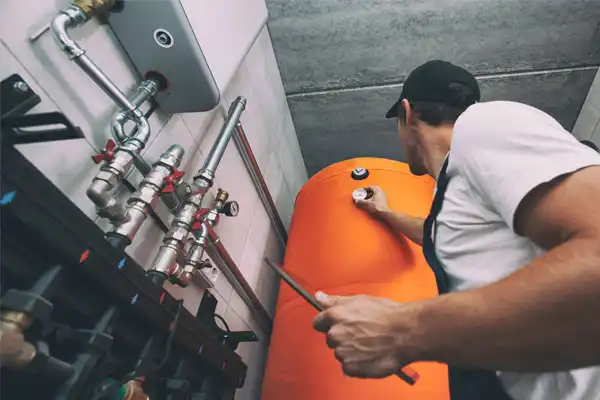
The second decision is what type and size of system fits the home. Oversizing wastes money and space. Undersizing causes domestic unrest, especially in households where consecutive showers are considered a human right. Correct installation matters because poor setup can shorten equipment life, increase energy use, or create safety concerns. That principle is familiar in HVAC as well. Proper installation of heating and cooling equipment depends on correct sizing, charging where refrigerant systems are involved, and careful setup. Water heaters are no different in spirit. Equipment performance depends heavily on installation quality.
The repair-or-replace conversation nobody loves but everyone needs
A responsible plumber does not treat every water heater complaint as a sales opportunity. Sometimes a repair buys meaningful life from equipment. Sometimes replacement is the more honest recommendation. The trick is not pretending the answer is always obvious before anyone has looked at the system.
Age matters, but it is not the only factor. Usage, water quality, maintenance history, installation conditions, and visible deterioration all shape the decision. A lightly used unit in a clean mechanical room may age differently from one in a damp closet with poor access and years of mineral-heavy water flowing through it. Water quality also links naturally to water softener installation. In areas with hard water, scale can affect plumbing fixtures, appliances, and water-heating performance. A water softener is not a universal cure for every plumbing issue, but in the right home it can reduce some of the punishment that minerals inflict over time.
The symptoms matter too. Lukewarm water may come from controls, elements, thermostats, burners, dip tubes, or other causes depending on the system. Rumbling or popping noises often suggest sediment or mineral accumulation, though diagnosis should not be done by sound alone unless the plumber is also moonlighting as a percussion critic. Water at the base of the unit could come from a fitting, valve, condensation, discharge line, or the tank. The difference is enormous.
A repair-first mindset works when the failure is isolated and the system still has reasonable service potential. Replacement makes more sense when the tank leaks, safety issues appear, parts are no longer practical, or the unit has become a recurring expense. A good technician explains that without theater. Nobody needs a tragic monologue beside a drain pan.
Plumbing leak repair and the detective work behind it
Leaks are sneaky. A burst pipe announces itself like a marching band. A small leak behind a wall behaves more like a pickpocket. By the time stains, odors, soft flooring, or cabinet damage appear, the leak may have been active for a while.
Plumbing leak repair requires patience because water travels. The wet spot is not always the leak source. Water can run along pipes, framing, insulation, and surfaces before showing itself in a completely unfair location. A ceiling stain under an upstairs bathroom may come from a supply line, drain line, wax seal, shower valve, tub overflow, caulking failure, or condensation issue. A plumber who opens the first wet spot without thinking can create extra damage while still missing the culprit.
Leak repair also intersects with plumbing repiping. A single bad fitting is one thing. A system with repeated leaks, corrosion concerns, or outdated piping may call for a broader conversation. Repiping is disruptive, and no honest person should pretend otherwise. Walls may need access. Fixtures may be temporarily offline. Planning matters. But repeated spot repairs can become its own slow-motion renovation, only more annoying because each episode arrives as a surprise.
This is where judgment separates a repair technician from a parts-changer. The plumber has to weigh the present leak, the age and condition of the system, the owner’s plans, and the likelihood of more failures. Sometimes the wise move is AC repair service a small repair. Sometimes it is time to stop patching the ship and start replacing planks.
Where plumbing meets HVAC without asking permission
Many service companies operate across plumbing, heating, air conditioning, and related mechanical work because buildings do not separate problems neatly. The official categories may distinguish plumbing, heating, air-conditioning, and electrical services, but a mechanical room laughs at tidy labels. It puts pipes, wires, ducts, gas lines, drains, vents, and equipment in the same cramped space, then dares everyone to work elegantly.
An air conditioning contractor focuses on installing and maintaining heating, ventilation, and air-conditioning equipment. An air conditioning repair service may handle cooling failures, airflow issues, refrigerant-related service, and other system concerns. Air conditioning maintenance and an air conditioning tune-up are not glamorous phrases, but they matter because equipment lasts longer and performs better when it is correctly maintained. For air conditioners and heat pumps, proper installation includes correct sizing and proper refrigerant charging. Poor charging can increase energy consumption and raise failure risk. That detail is not trivia. It is the difference between a system that behaves and one that sends utility bills into interpretive dance.
Plumbing shows up in HVAC more often than people expect. Air conditioning systems produce condensate that must drain correctly. Furnaces and high-efficiency heating equipment may also involve condensate handling. Heat pump installation may require coordination between HVAC, electrical, and drainage considerations. Furnace repair service may involve heating expertise, venting knowledge, gas safety, and sometimes adjacent plumbing concerns in the same mechanical area.
Then there is electrical work. Electrical service is separately classified for good reason. It demands its own licensing, training, and safety discipline. A plumber may recognize an electrical concern around a water heater or pump, but recognition is not the same as authorization to perform electrical work. That is when a qualified electrician or lighting contractor belongs in the conversation. The best service companies know how to coordinate rather than improvise. Improvisation is lovely in jazz. Less lovely in a panel box.
The awkward little kingdom of gas, vents, and combustion
Gas appliances are not a place for guesswork. Water heaters, furnaces, and some heating systems may depend on gas installation service, correct venting, combustion air, and safe clearances. A small error can create serious risk. This is why the person doing the work needs the proper qualifications for the jurisdiction and the equipment involved.
Gas work also demonstrates why “handy” is not the same as “qualified.” A person may be very good at shelves, door hinges, and assembling furniture with instructions written by a committee of sleepy owls. That does not mean they should alter a gas connection or vent a combustion appliance. A plumber or heating contractor who handles this work professionally understands that the invisible details matter. Tight connections, proper materials, correct vent routing, and manufacturer instructions are not decorative suggestions.
The same principle applies to refrigerant-bearing air conditioners and heat pumps. Air conditioners and other refrigeration equipment fall under regulated service definitions, and technicians involved in maintenance, service, repair, or installation may be covered by those requirements. The point is simple: mechanical work is not one big bucket of “fixing stuff.” Different systems carry different technical and regulatory responsibilities.
What a well-run service call feels like
A homeowner can tell a lot about a contractor in the first ten minutes. Not everything, but enough to form an educated eyebrow raise.
A strong service call starts with listening. The customer’s description may be imperfect, but it often contains the clue that matters. “The kitchen sink backs up only when the dishwasher drains” is useful. “The water heater makes noise after long showers” is useful. “The air conditioning repair guy was here last month and said something about condensate” might be more useful than it sounds. Mechanical systems keep receipts.
The technician then verifies. Good troubleshooting resists assumptions. For drain cleaning, that may mean checking which fixtures are affected, locating cleanouts, considering the route, and choosing the right machine or method. For water heater repair, it means identifying the source of the symptom before replacing parts. For plumbing leak repair, it means tracking the source, not just the stain.
Communication matters just as much as tools. A plumber should be able to explain what is wrong in plain English without making the homeowner feel like they accidentally enrolled in trade school. If the answer is uncertain, say so. If there are two reasonable approaches, explain the trade-off. A temporary drain clearing may restore flow today, while a deeper investigation may be needed if the stoppage returns. A water heater part replacement may be economical, while a tank leak changes the conversation completely.
The best contractors also keep the surrounding systems in mind. If a water heater problem involves wiring, bring in an electrician. If a drain issue connects to septic behavior, recommend septic system service. If a condensate line from an air conditioner keeps clogging, involve the air conditioning maintenance side of the business. If a furnace shares space and venting concerns with other equipment, a heating contractor or furnace repair service should evaluate the full setup. Good service is not territorial. It is accurate.
A short homeowner prep guide before the plumber arrives
Preparation helps, and no, it does not require polishing the mechanical room like royalty is visiting. It just means clearing the path and gathering the facts. Plumbers have seen laundry piles, storage chaos, and the mysterious bucket of old extension cords. They will survive. Still, a little access can save time.
- Clear space around the affected drain, water heater, or mechanical equipment.
- Stop using fixtures that are backing up or leaking until the technician arrives.
- Note when the problem started and which fixtures are involved.
- Mention any recent air conditioning repair, furnace repair, electrical work, or plumbing changes.
- Keep pets secured, especially the heroic dog who believes every toolbox is a threat.
That last one is not a joke. Many technicians have negotiated with Labradors who considered pipe wrenches a personal insult.
Drain cleaning mistakes that make plumbers sigh into the middle distance
Chemical drain cleaners deserve careful mention. They are widely available and often marketed as effortless miracles. In reality, they can be harsh, inconsistent, and risky depending on the pipe, clog, and situation. If they fail, the plumber may arrive to a line full of standing chemical soup, which adds hazard to the repair. A plunger or simple sink trap cleaning may be reasonable for minor local issues, but repeated use of chemicals as a lifestyle is a warning sign.
Another mistake is treating every clog as a surface problem. Grease is the classic villain. It enters as a warm liquid, cools in the pipe, and turns into a clingy film that collects more debris. Garbage disposals do not make grease disappear. They just give it a more confident entrance. The same goes for excessive food scraps, coffee grounds, wipes, and items labeled “flushable” that behave in plumbing as if they missed the meeting.
Then there is the cleanout problem. Cleanouts provide access for drain cleaning, and their location matters. Some homes have accessible cleanouts. Others hide them behind storage, landscaping, finished walls, or the kind of outdoor shrubbery that fights back. When a plumber has proper access, the work often becomes cleaner and more direct. When access is poor, the job can become slower, messier, and more expensive. This is not because plumbers enjoy drama. Most would prefer the pipe simply introduce itself.
Water heater installation is not just delivery with plumbing attached
A water heater installation should match the home, the fuel source, the available space, the venting arrangement, and the household demand. The installer must account for safe operation and serviceability. A unit crammed into a spot with no working room may technically fit, the same way a piano technically fits in a bathroom if everyone gives up dignity.
Proper installation affects performance and longevity. Connections must be correct. Drainage and relief pathways must be handled appropriately. Gas or electrical requirements must be respected. Venting, where applicable, must be right. If the installation affects or depends on other systems, the right trade should be involved. That might mean an electrician, gas installation service, or heating contractor.
Replacement also offers a chance to fix old annoyances. Maybe the previous installation lacked good access. Maybe the shutoff was awkward. Maybe the water heater sat in a pan that had no useful drainage path. Maybe the surrounding piping looked like it was assembled during a thunderstorm. A good plumber will not turn a replacement into an unnecessary upsell carnival, but they should point out practical improvements while the system is already open.
Water softener installation can also enter the conversation if water quality has been hard on fixtures and appliances. It is not automatically required with every water heater, and anyone who says otherwise may be selling harder than they are diagnosing. But where hard water causes visible scale and recurring maintenance issues, conditioning the water may be part of a broader plan.
The broader mechanical picture: one house, many trades
The modern service contractor often lives at the intersection of plumbing and HVAC. That includes air conditioning repair, air conditioning maintenance, air conditioning tune-up work, heat pump installation, furnace repair service, and heating system support. Some companies also coordinate electrical and lighting contractor needs, while keeping in mind that electrical work is its own specialized field.
The practical advantage for a property owner is continuity. If the same company or coordinated team understands the plumbing, heating, cooling, and related mechanical systems, patterns become easier to spot. A recurring condensate drain clog from an air conditioner may not be a general plumbing issue. A utility room leak may be tied to a water heater, furnace condensate, or nearby piping. A water heater replacement may raise venting, gas, or electrical questions that belong in the same planning conversation.
Still, broader service offerings should never become blurred accountability. The right person should do the right work. HVAC contractors specialize in installing and maintaining heating, ventilation, and air-conditioning equipment. Electrical work belongs with qualified electrical professionals. Plumbing repairs belong with plumbers. Gas systems require proper qualifications. The best companies do not blur those lines. They build bridges between them.
That distinction matters because homes are unforgiving laboratories. A mistake in one system can affect another. A poorly routed drain can damage equipment. A bad electrical connection can create risk. Incorrect HVAC installation can waste energy and increase failure risk. Improper plumbing can leak silently. When trades coordinate well, the homeowner gets a system that works as a whole instead of a collection of grudges.
Why maintenance beats emergencies, despite having worse stories
Emergency calls make better stories. Maintenance makes better bank accounts. Nobody gathers around at dinner to hear about the time a technician inspected a water heater, cleaned up a minor issue, and everything continued working normally. But that is the point.
Air conditioning maintenance and an air conditioning tune-up help HVAC systems run properly. Water heater checks can catch visible corrosion, valve concerns, venting issues, or early signs of trouble. Drain maintenance, used sensibly, can reduce nuisance backups in lines prone to buildup. None of this guarantees a problem-free life. Mechanical systems age, parts fail, and drains sometimes meet objects they were never meant to know. But maintenance reduces surprises, and surprises are where costs and inconvenience tend to breed.
The same thinking applies to heating. A furnace repair service can respond when heat fails, but routine attention from a heating contractor may find issues earlier. Heat pump installation should be done with proper sizing and setup, not treated as a box swap. Air conditioning repair service is essential when cooling fails, but proper maintenance and installation quality influence how often those failures occur.
Plumbing has its maintenance equivalents. Know where shutoff valves are. Keep cleanouts accessible. Pay attention to slow drains before they become backups. Do not ignore small leaks. Replace aging supply lines and valves when appropriate. If the plumbing system has a history of repeated leaks, discuss plumbing repiping before the house starts scheduling its own water features.
The plumber you want when the drain is full and the shower is cold
The right plumber is not merely fast. Fast is good, especially when water is traveling where it has no lease agreement. But the better measure is accuracy. Did the technician identify the source? Did they choose the right method? Did they explain the options? Did they respect the boundaries between plumbing, HVAC, gas, and electrical work? Did the repair solve the problem rather than just silence it temporarily?
For drain cleaning, that means understanding when a simple clearing is enough and when repeated clogs call for deeper investigation. It means using rooter service or hydrojetting according to the pipe, blockage, and access, not according to whatever machine happens to be closest to the truck door.
For water heaters, it means giving a fair repair-or-replace assessment. It means recognizing when water heater repair makes sense and when water heater installation is the safer, more practical choice. It means considering gas, electrical, venting, water quality, access, and household demand. It also means leaving the area cleaner than the plumber found it, or at least not making the utility room look like a raccoon hosted a workshop.
For plumbing leak repair, it means finding the source, not just the symptom. For plumbing repiping, it means planning carefully and explaining disruption honestly. For water softener installation, it means recommending it where water conditions and household goals support the decision. For larger mechanical work, it means coordinating with an air conditioning contractor, electrician, furnace repair service, heating contractor, lighting contractor, gas installation service, or septic system service when the job calls for it.
A house depends on invisible competence. Pipes hidden in walls. Drains under floors. Tanks in closets. Ducts above ceilings. Wires behind panels. Gas lines, vents, condensate drains, pumps, valves, and fixtures all doing their work quietly until something fails. Drain cleaning and water heater service may seem like ordinary trades work, but when done well, they protect comfort, sanitation, safety, and the simple pleasure of turning a handle and getting the result you expected.
That is the magic trick of a good plumber. Not making a show of it. Just making the water go where it should, heat when it must, drain when asked, and stay out of the living room carpet.
Name: Service Lion Plumbing Heating Air Electric
Address: 521 W Briardale Ave, Orange, CA 92865, United States
Phone: (657) 567-7305
Website: https://callservicelion.com/
Email: [email protected]
Hours:
Monday: Open 24 hours
Tuesday: Open 24 hours
Wednesday: Open 24 hours
Thursday: Open 24 hours
Friday: Open 24 hours
Saturday: Open 24 hours
Sunday: Open 24 hours
Open-location code: R48R+WV Orange, California, USA
Map/listing URL:
https://www.google.com/maps/search/?api=1&query=Google&query_place_id=ChIJQU4LBWHV3IARtnABtyykSA4
Google Map:
Socials:
https://www.facebook.com/ServiceLionCA/
https://www.youtube.com/channel/UCR_L35QzsRTxYZtX8PxJvPw
Local Service Information
Service Lion Plumbing Heating Air Electric provides plumbing, drain, heating, air conditioning, and electrical services from its Orange, California location.The company serves homeowners and properties throughout Orange and communities across Orange County and surrounding areas.
Available services include plumbing repairs, water heater work, drain and sewer services, heating and cooling service, electrical repairs, panels, lighting, outlets, and related home-system work.
Service is available for residential properties as well as light commercial needs described within the company's local service-area information.
The company's website emphasizes locally operated service, coordinated home-system support, and practical scheduling for plumbing, HVAC, and electrical needs.
The matching public business listing shows the Orange location as open 24 hours a day, seven days a week.
For service information or scheduling, call (657) 567-7305 or visit https://callservicelion.com/.
The public map listing identifies the business at 521 W Briardale Ave, Orange, CA 92865 and can be used for location and direction information.
Popular Questions About Service Lion Plumbing Heating Air Electric
What services does Service Lion Plumbing Heating Air Electric provide?
The company provides plumbing, drain and sewer, heating, air conditioning, and electrical services. Its published services include plumbing repair, water heaters, drain clearing, sewer work, HVAC repair and installation, electrical repairs, panels, circuit breakers, lighting, outlets, and related services.
Where is Service Lion Plumbing Heating Air Electric located?
The matching business location is 521 W Briardale Ave, Orange, CA 92865, United States.
What areas does Service Lion Plumbing Heating Air Electric serve?
The company serves Orange County and surrounding communities. Its published service-area information includes Orange, Anaheim, Brea, Yorba Linda, Fullerton, Huntington Beach, Newport Beach, Costa Mesa, Irvine, Lake Forest, and additional nearby cities.
Is Service Lion Plumbing Heating Air Electric open 24 hours?
The matching public business listing shows the location as open 24 hours on Monday through Sunday.
Does Service Lion Plumbing Heating Air Electric work on drains and sewer lines?
Yes. Published services include drain clearing, rooter service, camera inspection, hydro jetting, sewer line repair and installation, water line work, slab leak detection, and trenchless sewer line repair.
Does Service Lion Plumbing Heating Air Electric provide heating and air conditioning service?
Yes. Its published HVAC services include air conditioning repair and installation, heating service, furnace work, heat pumps, air ducts, indoor air quality assessments, and thermostat installation.
Does Service Lion Plumbing Heating Air Electric provide electrical service?
Yes. Published electrical services include repairs and installations, electrical panels, circuit breakers, safety inspections, lighting, outlets and switches, surge protection, generators, and EV charging equipment installation.
How can I contact Service Lion Plumbing Heating Air Electric?
Call (657) 567-7305.
Email: [email protected]
Website: https://callservicelion.com/
Facebook: https://www.facebook.com/ServiceLionCA/
Landmarks Near Orange, California
Old Towne Orange Historic District
A central historic district and useful geographic reference point for the Orange community.
Plaza Park
A well-known public gathering point in the center of Old Towne Orange.
Orange Public Library & History Center
A civic landmark serving residents near central Orange.
Hart Park
A major public park and recreation area south of central Orange.
Eisenhower Park
A public park serving neighborhoods in northern Orange.
Santiago Oaks Regional Park
A regional recreation and open-space landmark on the eastern side of Orange.
Irvine Regional Park
A large regional park and recognizable reference point east of the city.
Orange Park Acres
A distinctive residential community and service-area reference point in eastern Orange.
El Modena
An established Orange neighborhood that provides a practical local coverage reference.
Glassell Street
One of the city's principal north-south streets and a useful route through central Orange.
Lincoln Avenue
A major east-west roadway serving northern Orange and nearby communities.
State Route 55
A primary regional freeway connecting Orange with other parts of Orange County.